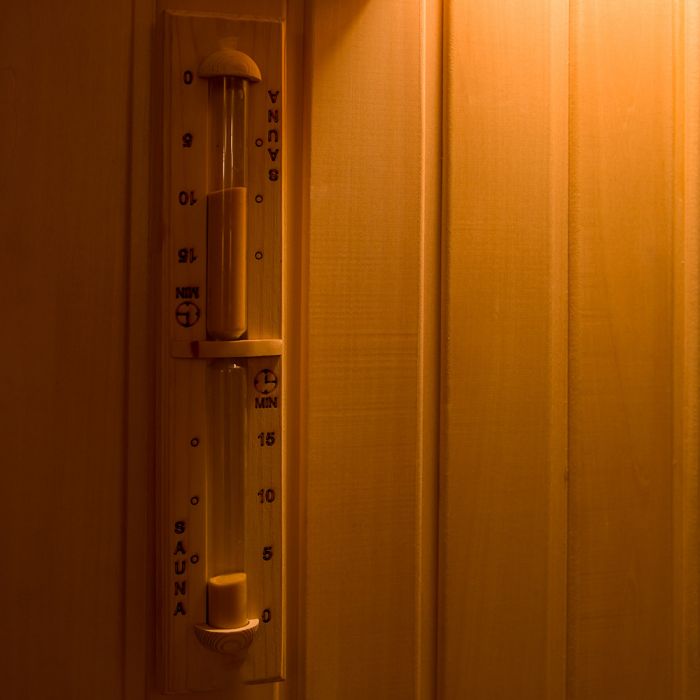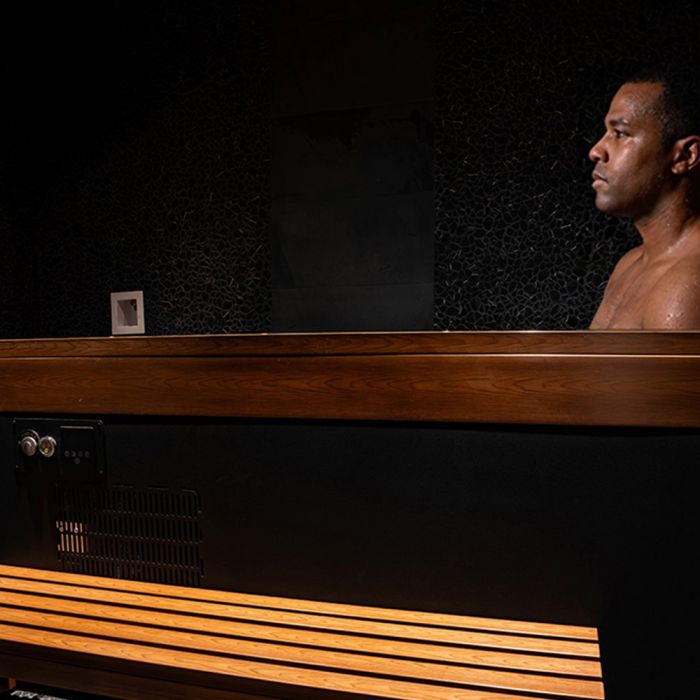



Quick Summary: How Long Should You Stay in a Sauna?
- Beginners: Start with about 5 to 10 minutes and gradually increase your sauna time as your body becomes more comfortable with the heat.
- More experienced sauna users: Around 15 to 20 minutes is a common range, but longer does not automatically mean better.
- Temperature matters: Traditional saunas commonly range from about 150°F to 195°F, so time and temperature should always be considered together.
- Hydration matters: Drink water before and after sauna use, especially if you sweat heavily or complete multiple rounds.
- Listen to your body: Leave the sauna if you feel dizzy, nauseated, weak, confused or otherwise unwell.
- Think ritual, not endurance: The goal is to build a sauna routine that feels restorative, sustainable and worth returning to.
If you are new to sauna, one of the first questions you are likely to ask is also one of the most searched:
How long should you stay in a sauna?
The answer is not as simple as setting a timer for 20 minutes and forcing yourself to stay until it rings.
Your ideal sauna time depends on several factors, including your experience with heat, hydration, the temperature of the sauna, your health history and, most importantly, how your body is responding during the session.
At SoulSpace in Cleveland, we think of sauna differently. It is not an endurance challenge. It is a recovery ritual.
Learning how to use it well is much more important than learning how long you can tolerate it.
How Long Should a Beginner Stay in a Sauna?
If you are completely new to sauna bathing, shorter sessions are a smart place to begin.
A general starting point is about 5 to 10 minutes. As your body becomes more familiar with the heat, you may gradually work toward sessions of around 15 to 20 minutes if that feels comfortable.
Rather than deciding that you have to last a certain amount of time, give your body an opportunity to acclimate. Sit comfortably, breathe normally and pay attention to how you feel.
Research on traditional sauna bathing has examined a variety of durations, temperatures and frequencies, so there is no single scientifically established number that every person should treat as the ideal session. A review of sauna bathing research indexed by PubMed discusses both the physiological effects associated with sauna use and the range of protocols studied.
The goal is not maximum heat exposure.
The goal is a session you can comfortably and consistently incorporate into your wellness routine.
What Temperature Should a Sauna Be?
Sauna time and sauna temperature go hand in hand.
Traditional saunas commonly operate at approximately 150°F to 195°F. Within that range, the same amount of time can feel very different depending on the temperature, your personal heat tolerance and how accustomed you are to sauna.
If you are new to high heat, there is no reason to start at the hottest temperature or remain inside simply because someone else can.
As the temperature rises, you may find that a shorter session feels complete. On another day, at a different temperature, you may naturally feel comfortable staying longer.
At SoulSpace, guests can experience a traditional sauna in Cleveland in a calm, private environment designed for relaxation and recovery.
What Happens to Your Body in a Sauna?
When you enter a traditional sauna, your body immediately begins responding to the hot environment.
Skin temperature rises. Sweating increases. Heart rate and circulation change as your body works to regulate temperature.
These responses are part of the reason sauna bathing has received growing scientific attention. Research has explored associations between regular sauna use and cardiovascular health, vascular function and other health outcomes. Long-term observational studies have also identified associations between frequent sauna bathing and lower cardiovascular mortality, although observational associations do not prove that sauna itself causes those outcomes.
That research is discussed in the PubMed review of cardiovascular and other potential health benefits of sauna bathing.
In practical terms, however, you do not need a laboratory measurement to recognize something many regular sauna users already understand:
Heat creates a forced pause.
There is nowhere to rush.
Nothing to scroll.
Nothing to accomplish.
You simply sit.
For many people, that becomes as valuable as the physical experience itself.
Is 20 Minutes in a Sauna Enough?
For many sauna users, a session in the general neighborhood of 10 to 20 minutes can feel substantial.
But “enough” may be the wrong word.
A 10-minute sauna session that feels restorative is more useful than forcing yourself through 30 uncomfortable minutes because someone online told you that longer is better.
More heat exposure does not automatically equal more benefit.
One experimental study indexed by PubMed, for example, documented cardiovascular changes following a 30-minute sauna session. That does not mean 30 minutes should become a universal target. Sauna research includes considerable variation in temperature, duration, participant health and study design.
That is why the best approach is individualized.
Should You Do One Long Sauna Session or Multiple Rounds?
Many experienced sauna users prefer rounds rather than one prolonged period in the heat.
A simple sauna rhythm might look like:
- Sauna.
- Cool down.
- Hydrate.
- Relax.
- Check in with your body before deciding whether you want another round.
You do not have to complete all of your sauna time at once.
At SoulSpace, guests can also incorporate cold plunge, relaxation space and other wellness experiences around their sauna session. For those interested in intentionally alternating between heat and cold, our guide to contrast therapy in Cleveland explains how sauna and cold plunge can work together as part of a broader recovery ritual.
This allows a visit to become a complete recovery experience rather than a race against a sauna timer.
When Should You Leave the Sauna?
This may be more important than knowing exactly how long to stay.
If you experience significant dizziness, nausea, weakness, confusion, chest discomfort or otherwise feel unwell, leave the heat and give your body time to cool down.
Do not treat discomfort as something you need to push through.
Your body is giving you information.
Hydration also matters. Sauna increases fluid loss through sweating, and alcohol before or during significant heat exposure is not a good combination.
People who are pregnant or who have cardiovascular, renal or other significant medical conditions should discuss sauna use with an appropriate healthcare professional before beginning a heat-exposure routine.
How Much Water Should You Drink Before and After a Sauna?
Hydration is part of the sauna experience, not an afterthought.
Because sauna increases sweating, arriving well hydrated and replenishing fluids afterward can help support a more comfortable session.
If you sweat heavily or enjoy multiple sauna rounds, electrolytes may also become part of your routine. For a deeper look at what to drink before, during and after heat exposure, read our SoulSpace guide to hydration and electrolytes for sauna.
A simple rhythm to remember is:
- Hydrate before your sauna session.
- Sip water while cooling down between rounds.
- Replenish fluids after you finish.
How Often Should You Sauna?
Consistency matters more than intensity.
You may begin with one sauna session per week and discover that it becomes something you want several times per week. Another person may prefer sauna after particularly demanding workouts or stressful weeks.
There is no requirement to turn wellness into another rigid calendar.
What matters is whether the practice fits into your life, feels supportive and leaves you wanting to return.
Can You Sauna and Cold Plunge in the Same Visit?
Yes. Alternating heat and cold is commonly called contrast therapy.
SoulSpace gives guests access to both traditional sauna and cold plunge within the same Cleveland wellness environment, making it easy to incorporate heat, cold, hydration and rest into one visit.
Beginners should approach both modalities conservatively rather than trying to recreate an extreme protocol they saw online.
Start with manageable exposure. Cool down. Breathe. Hydrate. Pay attention to how your body responds.
A great contrast experience should leave you feeling refreshed.
Not defeated.
Frequently Asked Questions About Sauna Time
How long should I stay in the sauna my first time?
A good starting point for beginners is approximately 5 to 10 minutes. Pay attention to how your body responds rather than trying to reach a predetermined time. You can gradually extend your sessions as you become more accustomed to the heat.
Is 10 minutes in a sauna enough?
Yes. A comfortable 10-minute sauna session can still be a meaningful experience, especially if you are new to sauna or using a higher temperature. You do not need to force a longer session simply to reach an arbitrary number.
Is 20 minutes in a sauna too long?
For many people who are comfortable with sauna, approximately 15 to 20 minutes can be a reasonable range. Your heat tolerance, hydration, sauna temperature and overall health should still determine when you leave.
Do I need to cold plunge after a sauna?
No. Cold plunge is optional. Some people enjoy finishing sauna with cold exposure, while others prefer a cool shower, gradual cooldown or time relaxing between rounds.
Should I drink water before sauna?
Yes. Hydration is important because sweating increases fluid loss. Arriving well hydrated and replenishing fluids afterward is a sensible part of sauna use.
Is sauna good after a workout?
Many people enjoy sauna after training as part of their recovery routine. Consider the intensity of your workout, your hydration status and how your body is feeling before adding additional heat exposure.
How hot is a traditional sauna?
Traditional saunas commonly operate between approximately 150°F and 195°F. The hotter the environment feels to you, the more important it becomes to let comfort and your body’s response guide your sauna time.
Experience a Traditional Sauna in Cleveland at SoulSpace
A sauna session should not feel like another thing you have to accomplish.
It should feel like time you intentionally gave back to yourself.
Whether you are building a recovery routine, looking for a sauna near Ohio City, searching for a traditional sauna in Cleveland, adding heat therapy after workouts or simply looking for somewhere to unplug for a while, SoulSpace was created to make recovery feel like an experience worth returning to.
Located at 5605 Tillman Ave in Cleveland’s Gordon Square and Detroit Shoreway area, minutes from Ohio City, SoulSpace brings sauna, cold plunge, relaxation and modern wellness experiences together in one beautifully designed space.
Ready to experience SoulSpace? Explore a day pass for a restorative visit or view our SoulSpace memberships to make sauna and recovery part of your ongoing wellness ritual.
SoulSpace
5605 Tillman Ave
Cleveland, OH 44102
216-377-1786
Wellness disclaimer: This article is for educational purposes and is not medical advice. Individual responses to heat exposure vary. Consult an appropriate healthcare professional if you have a medical condition, are pregnant or have concerns about sauna use.